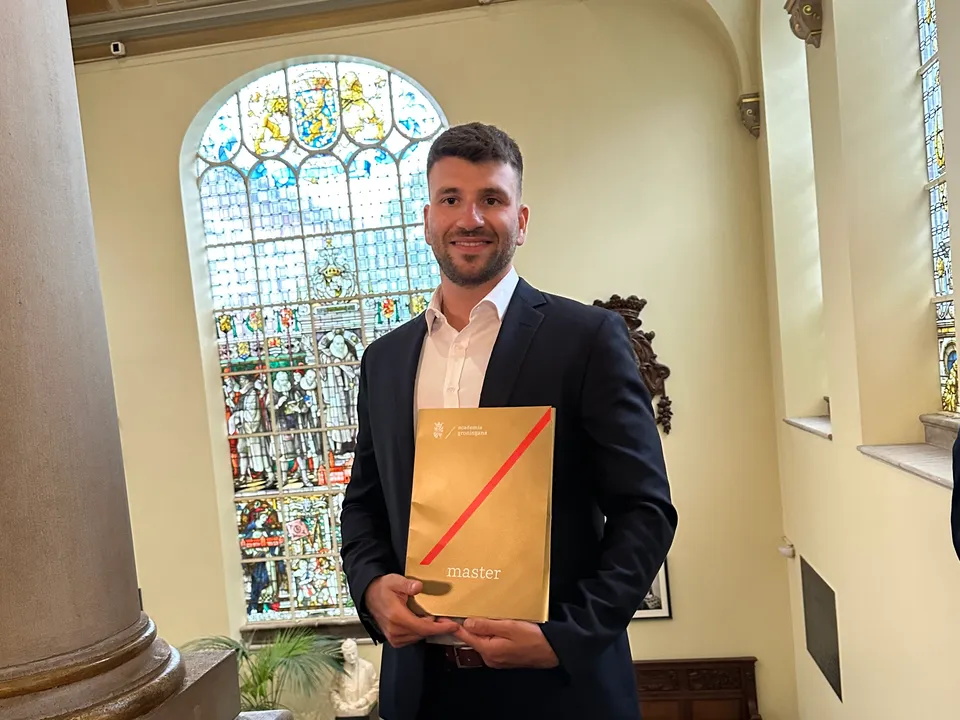
Hello, I am Apostolos. Welcome to my personal website! I am a researcher in the field of biomedical sciences. Here you will find information about my career, including my educational background, research experience and notable achievements. I have dedicated myself to the pursuit of scientific knowledge in biomedical research. This website offers a glimpse into the projects I have been involved in, the research questions I have explored and the methods I have used along the way.
My background
Although I am originally from Greece, I studied biology at the University of Sheffield in the United Kingdom. This allowed me to experience a different educational system and gain exposure to the international scientific community, which sparked great enthusiasm and ambition in me. The program equipped me with essential skills for conducting research, including resourcefulness, attention to detail, resilience and adaptability. Being exposed to a wide variety of disciplines also helped me find my preferences, which are cell and molecular biology in biomedical research. During my final year at university I took part in molecular research exploring the role of extracellular self-DNA in plant innate immunity. Over the course of this work I helped identify the core hormone signaling pathways involved in extracellular self-DNA recognition and immune elicitation in the model plant species Arabidopsis thaliana. The project increased my laboratory experience and sharpened my experimental design skills. My enthusiasm for biology, combined with sound methodology and hard work, helped me earn a first-class degree.
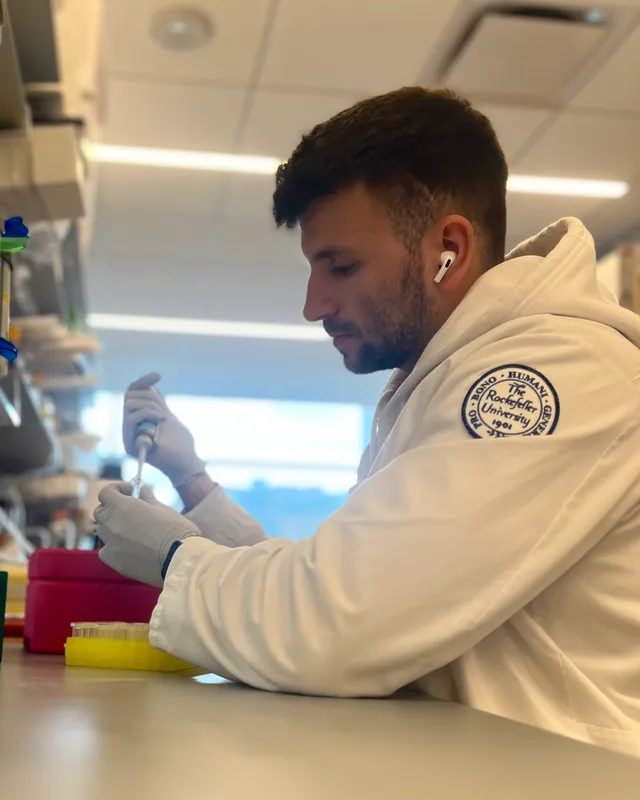
I am an advocate of learning through hands-on experience. Beyond my degree I took part in three additional internship programs. These experiences revealed to me the impact of biomedical research on enriching our understanding of diseases and on developing new medications and treatments. Working in multiple laboratory settings expanded my knowledge and further developed my skills. I then joined Dr. John LaCava’s team, first at the European Research Institute for the Biology of Ageing in Groningen and then at The Rockefeller University in New York. There I took part in several projects on human LINE-1 retrotransposable elements, using techniques such as protein purification by affinity capture, gene editing with CRISPR/Cas9, molecular DNA cloning and cell culture.
Dr. LaCava encouraged me to look for master’s and PhD programs, believing I would be a strong candidate. This aligned with my own plans for the future. I chose the MSc in Molecular Medicine and Innovative Treatment (MMIT) at the University of Groningen for its comprehensive and research-focused curriculum. It is known as an award-winning program in its category in the Netherlands. It also offers a broad range of specializations and prepares students well for the transition to a PhD. I graduated cum laude in 2023 and was awarded a fellowship from the Graduate School of Medical Sciences to start my PhD in Groningen. In 2025 I moved to Brown University, where I am now a PhD candidate in the Pathobiology Graduate Program in the lab of Dr. Martin S. Taylor.
My vision is to build an academic career as a biomedical researcher. I aim to use my expertise and knowledge to help develop treatments for rare diseases, which place a heavy burden on the lives of many people around the globe. It is my lifelong dream to become a prominent researcher in my field and to use my leadership skills to share my knowledge with the next generation of researchers.
During my academic career I have been exposed to multiple research topics in biology and the biomedical sciences, ranging from the mechanisms of plant immunity to macromolecular interactions in human disease. My current research interests concern the role of human LINE-1 retrotransposons in healthy aging and disease. To improve our understanding of how LINE-1 activation contributes to disease, we employ affinity capture and mass spectrometry along with other biochemical approaches. These help us identify the interactions responsible for disease progression and dissect their mechanisms of action. Despite my focus on LINE-1 biology, I have been involved in several other projects. One of them was the characterization of the affinity-captured DNAJB1-PRKACA protein interactome in fibrolamellar hepatocellular carcinoma, a pediatric liver cancer whose oncogenesis is driven by a fusion between the DNAJB1 and PRKACA genes.
RNA biology
Proteomics
Interactomics
LINE-1 retrotransposons
Current project at Brown
Elucidating the Molecular Mechanisms of Cytoplasmic cDNA Synthesis by LINE-1 Retrotransposons
Department of Pathology and Laboratory Medicine, lab of Prof. Dr. Martin S. Taylor
Research project
The role of LINE-1-derived pathogen-associated molecular patterns in senescence and inflammaging
Transposable elements (TEs), also known as “jumping genes”, are mobile DNA elements that can replicate and integrate themselves into different locations within the host genome. We aim to characterize the composition of LINE-1 ribonucleoprotein complexes in cell senescence and dissect the immune pathways associated with the nucleic acids they carry, in particular cDNAs, dsRNAs and DNA-RNA hybrids generated by aberrant cytoplasmic LINE-1 activity.
Read the full summaryHide the full summary
Transposable elements (TEs), also known as “jumping genes”, are defined as mobile DNA elements that can replicate and integrate themselves into different locations within the host genome1. TEs have been identified in all organisms and often occupy a large proportion of their host genome2. TEs are divided into two classes based upon their mechanism of transposition. Class I TEs (also known as retrotransposable elements, or RTEs) mobilize via a ‘copy-and-paste’ mechanism, where an RNA intermediate is reverse-transcribed into cDNA that is subsequently inserted in a different location within the host genome3. Class II TEs (also known as DNA transposons) proliferate through a DNA intermediate in a more direct way, through a ‘cut-and-paste’ mechanism4,5. The most abundant RTEs in the human genome are LINE-1 (L1) and Alu elements, accounting for ~30% of the genome6. Unlike Alu, L1s encode their own proteins and are therefore capable of autonomous retrotransposition. In more detail, L1 consists of a 5’ UTR with an internal promoter, two open reading frames (ORFs, namely ORF1 and ORF2) and a 3’ UTR with a weak cleavage and polyadenylation signal7-9. ORF1 encodes ORF1p (~40 kDa), which forms a homotrimer and is a putative nucleic acid chaperone10,11, whereas ORF2 encodes ORF2p (~150 kDa), a multidomain enzyme with both endonuclease (EN) and reverse transcriptase (RT) activities12,13. L1 ORF1p and ORF2p preferentially assemble with their own encoding RNA (cis preference), forming ribonucleoprotein complexes (RNPs), presumably near or at the site of translation14,15. Notably, at all stages of the L1 retrotransposition process (i.e., L1’s ‘life cycle’), L1s engage various host-encoded proteins, some facilitating and others impeding its action16-23.
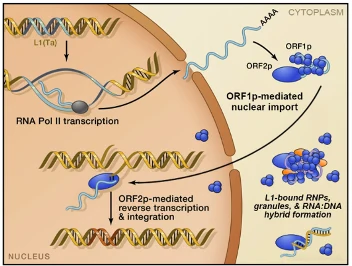
Figure 1. L1 life cycle. The L1 locus must be epigenetically de-repressed before RNA polymerase II transcription of L1 mRNA can follow. Once in the cytoplasm, the ORF proteins are translated in concert with L1 ribonucleoprotein (RNP) assembly (cis preference). Entry into the nucleus is required for L1 to access genomic DNA and carry out ORF2p-mediated target-primed reverse transcription (TPRT), resulting in a new L1 insertion. Non-canonical cytosolic events include aberrant reverse transcription, resulting in immunogenic DNA-RNA hybrids and the formation of RNP granules. The L1 interactors at every step are not displayed. Figure adapted from Burns & Boeke, 2012.
L1 retrotransposition proceeds through DNA/RNA/protein-containing intermediates across cellular compartments, predominantly in the nucleus and cytoplasm (Fig. 1). L1 enters the nucleus and gains access to chromatin as the cell starts to divide and the nuclear membrane breaks down24. According to the most recent model for L1 proliferation, termed target-primed reverse transcription (TPRT)25,26, cDNA production by ORF2p takes place in the nucleus and is primed by a free 3’ hydroxyl group, generated by ORF2p EN cleavage of host DNA. In healthy cells, L1 transcription is suppressed both epigenetically and by p53 and other transcription factors27-33. However, in cell senescence L1s become activated and trigger a type I interferon (IFN-I) response, causing inflammation34. Additionally, cell senescence is characterized by cell proliferation arrest, as well as by abnormal ORF2p-driven production of cytoplasmic cDNAs and DNA-RNA hybrids. Consequently, L1 RNPs become trapped and accumulate in the cytoplasm, while the hybrids produced act as pathogen-associated molecular patterns (PAMPs) that activate host cytoplasmic pattern recognition receptors (PRRs), including the cGAS/STING DNA sensing pathway35-37. As a result, this induces an IFN-I response, leading to increased secretion of proinflammatory cytokines, known as the senescence-associated secretory phenotype (SASP)34.
L1 RNPs are highly heterogeneous in composition and apart from DNA-RNA hybrids they also include other PAMPs. For example, L1 RNAs are enriched in CpG motifs and are therefore PAMPs themselves, but they also assemble with dsRNA-forming Alus38,39. L1 RNPs can therefore act as sites of aggregation of cytoplasmic hybrids and other PAMPs. Collectively, stimulation of innate immunity in response to RTE nucleic acids (NAs), especially by ORF2p-derived cDNAs and hybrids, constitutes a novel mechanism for understanding senescence-associated diseases. L1 RNPs assemble several pathogenic NAs, but their relative contributions to host innate immune responses remain uncharacterized. We aim to characterize the composition of L1 RNPs in cell senescence and dissect the immune pathways associated with RTE-derived NAs, in particular cDNAs, dsRNAs and DNA-RNA hybrids generated by aberrant cytoplasmic L1 activity.
Dissecting the molecular features of a rare pediatric cancer, fibrolamellar carcinoma, using a double-barreled interactome mapping approach
Fibrolamellar carcinoma (FLC) is a rare and lethal subtype of liver cancer that primarily affects adolescent and pediatric patients without a history of liver disease. We aim to compare the protein interactions and phosphorylation patterns of wild-type PRKACA, DNAJB1 and the DNAJB1-PRKACA fusion protein in normal liver, liver adenoma, hepatocellular carcinoma and FLC tissues.
Read the full summaryHide the full summary
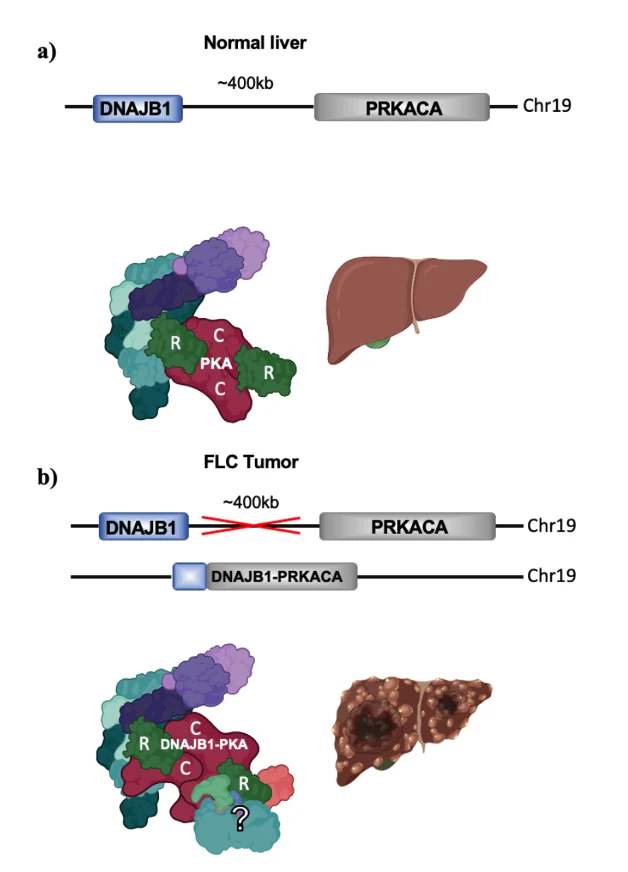
Figure 1. Schematic representation of (a) normal liver, in which PRKACA expression leads to a functional PKA tetramer consisting of two regulatory subunits (R) and two catalytic subunits (C) with canonical interactors. However, in (b) FLC tumors, a ~400 kb deletion between DNAJB1 and PRKACA on chromosome 19 results in a fusion of these two genes, eventually producing a unique chimeric oncoprotein which potentially gains an altered interactome that can be responsible for the development of this cancer.
Fibrolamellar carcinoma (FLC) is a rare and lethal subtype of liver cancer with a global incidence of 0.02 per 100,000 per year1. However, this tumor primarily affects adolescent and pediatric patients without a history of liver disease, making it a devastatingly impactful disease despite its comparative rarity. The mainstay of treatment is complete surgical removal, due to its refractory nature against potential cures such as chemoradiation2. FLCs lack obvious symptoms or serum tumor markers. Metastasis at presentation is frequent and often progressive and therefore fatal in nature1. A specific diagnostic genetic fusion event, DNAJB1-PRKACA, was identified as a candidate driver of FLC3. A deletion of 400 kb in chromosome 19 results in the fusion of fragments of the genes encoding the heat shock protein DNAJ (Hsp40), subfamily B, member 1 (DNAJB1) and the catalytic subunit alpha of protein kinase A (PRKACA)3. The deletion results in a chimeric RNA transcript in which exon 1 of DNAJB1 replaces exon 1 of PRKACA. This produces a fusion protein in which the J-domain of DNAJB1 (also known as HSP40) replaces an amino-terminal segment of the catalytic subunit alpha of the cyclic AMP-dependent protein kinase A (also known as PKA Cα)4, referred to as DP hereafter (diagrammed in Fig. 1). Notably, DP retains kinase activity and has been shown to have tumorigenic properties not explainable by simple overexpression of PRKACA5.
While the DP gene fusion event was previously thought to be unique to FLC, recent studies have also identified other pancreatobiliary neoplasms that exhibit the same defect (and others)6,7. This underscores the importance and health relevance of studying the roles of rare kinase fusion events in hepatopancreatobiliary tumors, as well as the role of this specific fusion event in FLC. We aim to conduct a comparative analysis of the protein interactions and phosphorylation patterns exhibited by wild-type PRKACA, DNAJB1 and DP fusion proteins, comparing what is observed in normal liver, liver adenoma, hepatocellular carcinoma and FLC tissues.
Nielsen MI, Wolters JC, Rosas Bringas OG, Jiang H, Di Stefano LH, Oghbaie M, Hozeifi S, Nitert MJ, van Pijkeren A, Smit M, Ter Morsche L, Mourtzinos A, Deshpande V, Taylor MS, Chait BT, LaCava J
PhD candidate in the Department of Pathology and Laboratory Medicine (Prof. Dr. Martin S. Taylor), Pathobiology Graduate Program. My project is elucidating the molecular mechanisms of cytoplasmic cDNA synthesis by LINE-1 retrotransposons.
Core skills
Immunoprecipitation
Molecular cloning (site-directed mutagenesis)
Cell culture and transfection of suspension cells
Generation of stable cell lines
In vitro transcription
mRNA transfection
qPCR
Flow cytometry and FACS sorting
Dec 2022 to present
The Rockefeller University
New York City, United States
Research assistant (internship) in the Laboratory of Cellular and Structural Biology (Prof. Dr. Michael Rout and Prof. Dr. John LaCava). Investigating the interplay of LINE-1 retrotransposon proteins with mitochondria and their contribution to the production of immune-triggering cytoplasmic RNA-DNA hybrids.
Core skills
Mitochondrial isolation by differential centrifugation and affinity capture
Subcellular fractionation by density gradient ultracentrifugation
Immunoprecipitation
Molecular cloning (site-directed mutagenesis)
Cell culture and transfection of suspension cells
Dec 2020 to Oct 2022
European Research Institute for the Biology of Ageing (ERIBA)
Groningen, The Netherlands
Research technician in the Laboratory of Macromolecules and Interactomes (Prof. Dr. John LaCava).
Gained exposure to a variety of molecular techniques, including CRISPR/Cas9, cell culture, western blot, immunoprecipitation, molecular cloning, transfection, fluorescence microscopy, DNA/protein extraction and bacterial transformation.
Designed small-scale experiments, such as the generation of cell lines and vector cloning.
Collaborated with labs around the world, including the Rout Lab at The Rockefeller University, the Yilmaz Lab at MIT, the Burns Lab at Dana-Farber Cancer Institute, the lab of Dr. Benjamin Greenbaum at Memorial Sloan Kettering Cancer Center and the lab of Prof. Dr. Tomas Mustelin at the University of Washington.
Collaborated with the pharmaceutical industry, namely Ribon Therapeutics and ROME Therapeutics.
Projects I contributed to
Dissection of the DNAJB1-PRKACA protein interactome by affinity purification and mass spectrometry from patient material with fibrolamellar hepatocellular carcinoma (FLHCC)
Comparative interactomic analyses of LINE-1 ribonucleoprotein from carcinoma cells
The role of LINE-1 retrotransposable elements in neurodegeneration and autoinflammatory diseases
Interplay of LINE-1 proteins with mitochondria
Nov 2021 to May 2022
University Medical Center Groningen (UMCG)
Groningen, The Netherlands
Internship in the Department of Gastroenterology and Hepatology (Prof. Dr. Klaas Nico Faber). I investigated the role of GDF7 in liver fibrosis and its effect on liver proliferation, work that contributed to our 2023 paper in Stem Cell Research & Therapy.
Core skills
FFPE tissue preparation
Immunofluorescence
Immunohistochemistry
Organoid culture
RNA extraction
cDNA synthesis
qPCR
Jun 2019 to Aug 2020
Biomedical Research Foundation Academy of Athens
Athens, Greece
Internship in the Department of Fundamental Research (Dr. Marios Agelopoulos).
Performed phylogenetic analysis of sequence data using Ensembl, NCBI, UniProt, Galaxy, Clustal, iTOL and R.
Identified potential transcription factor binding sites on DNA sequences.
Gained knowledge of laboratory procedures such as ChIP-seq and cell culture.
2019 to 2020
The University of Sheffield
Sheffield, United Kingdom
Final year research project in the Department of Animal and Plant Sciences (Prof. Dr. Jurriaan Ton).
Investigated the role of extracellular self-DNA (self-exDNA) in the immunity of Arabidopsis thaliana.
Explored the hormone signaling pathways induced in response to self-exDNA.
Examined the defense-eliciting activity of synthetic self-exDNA relative to genomic self-exDNA, as well as potential size-dependent effects of exDNA in inducing plant immunity.
Jun to Jul 2018
Agios Savvas General Anticancer Oncology Hospital
Athens, Greece
Summer internship in the Department of Cancer Cytogenetics.
Gained experience in routine procedures of blood analysis for cancer diagnosis and prognosis.
Trained in genomic DNA extraction from whole blood, cytogenetic analysis (blood cell culture, chromosome isolation, chromosome staining and G-banding, karyotyping) and fluorescence in situ hybridization (FISH) in lymphocytes from patients with leukemia.
Education
2025 to present
PhD candidate, Pathobiology Graduate Program
Brown University, United States of America
2023 to 2025
PhD student
University of Groningen, The Netherlands
Funded by a fellowship from the Graduate School of Medical Sciences. Research in Dr. John LaCava’s Laboratory of Macromolecules and Interactomes on the role of LINE-1 retrotransposons as provocateurs of autoinflammation and inflammaging.
2021 to 2023
MSc in Molecular Medicine and Innovative Treatment
University of Groningen, The Netherlands
Graduated cum laude.
2017 to 2020
BSc in Biology
The University of Sheffield, United Kingdom
First-class honours.
2016 to 2017
Foundation year in biology
Network Foundation, Athens, Greece
Grade 80% (A).
2011 to 2017
Secondary education
2nd High School of Vrilissia, Athens, Greece
Awards, scholarships and grants
Best poster prize
2024
Awarded by The EMBO Journal for outstanding poster presentation at the India EMBO Lecture Course in Greater Noida, India.
PhD fellowship from GSMS Groningen
2023 to 2027
Funds a four-year doctoral program at the UMCG. It is granted to just four students of the MMIT master’s program who submit the most outstanding research proposals, after a thorough assessment by a scientific committee.
Marko Polo Fund from the University of Groningen
2022/2023
A grant offered to exceptional students to conduct an internship abroad at a top university outside Europe.
Groningen University Fund (GUF)
2022
The GUF subsidizes activities that benefit studies at the University of Groningen.
Holland Scholarship
2022/2023
Made available by the Dutch Ministry of Education, Culture and Science together with Dutch research universities, for students who want to do research or an internship outside the European Economic Area.
De Cock-Hadders Stichting
Financial support for CPE, MMIT and IMIM students doing international internships in medicine, dentistry and movement sciences.
MMIT GUIDE funding
Reimbursement from the Groningen University Institute for Drug Exploration (GUIDE) for costs directly related to internships abroad, such as travel, visa fees and rent.
MMIT Ubbo Emmius funding
A grant for second-year MMIT students who do not receive a full scholarship from the UMCG, to conduct a research internship abroad.
News
Stay updated on the latest discoveries and progress in my research journey.
Paper published in Communications Biology
Our collaborative study showing that reverse transcriptase inhibitors induce autophagy in a LINE-1 ORF1p-dependent manner is now published in Communications Biology. Read the paper.
Poster prize
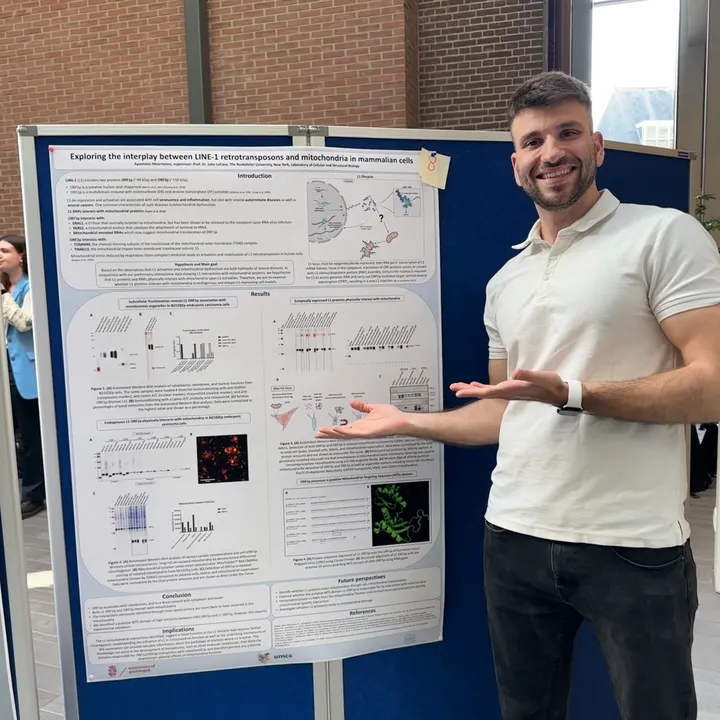
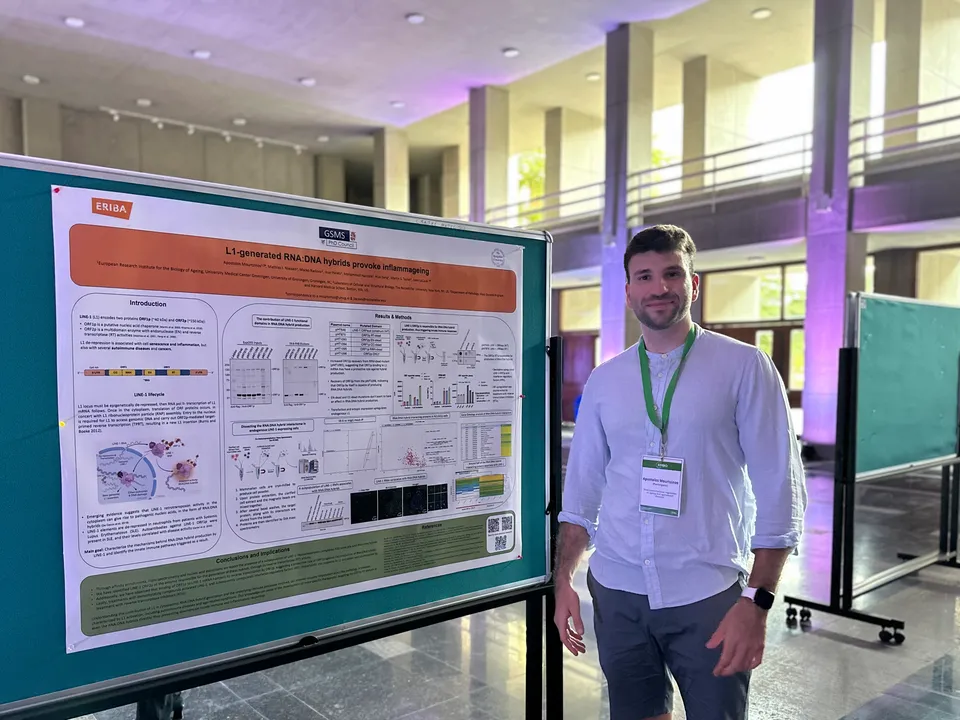
I am thrilled to announce that I have won the best poster prize at the India EMBO Lecture Course on post-transcriptional regulation in ageing and age-related diseases, held in Greater Noida, India. The prize is awarded by The EMBO Journal for outstanding poster presentation. The course, with its focus on cutting-edge research in gene expression regulation, provided an incredible platform for sharing my work with leading scientists and experts in the field from all over the world. I am grateful for the opportunity to present my findings and to be recognized by such a distinguished audience. This achievement inspires me to continue pursuing excellence in my scientific endeavors.
Master’s graduation
I am happy to announce that I have graduated with distinction cum laude from the MSc in Molecular Medicine and Innovative Treatment at the University of Groningen in the Netherlands. This journey has been a remarkable exploration of cutting-edge research and innovative treatments in the field of molecular medicine. I am grateful for the support of my professors and peers and for the invaluable knowledge I gained during this program. I look forward to applying this expertise to make meaningful contributions to the world of science and healthcare.
PhD fellowship
I am delighted to share the wonderful news that I have been awarded a prestigious fellowship from the Graduate School of Medical Sciences (GSMS) of the University of Groningen. It will fund my PhD studies for the next four years. I am excited to embark on this research adventure and contribute to the field.